
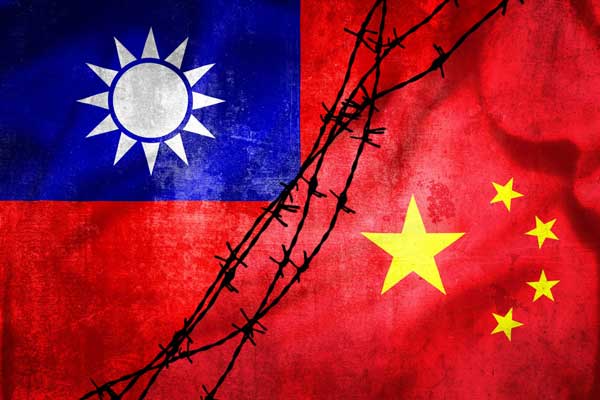
The relationship between China and Taiwan is one of the most complex and consequential in the world. Recent military exercises and rising tensions have reignited global concerns over the possibility of conflict. Understanding the historical background, political shifts, and economic developments gives insight into why relations are fraught and what drives current events.
Early History of Taiwan
Taiwan’s history before Chinese rule is marked by shifting control between foreign powers and indigenous populations. Chinese efforts to incorporate the island date back to the early seventh century, but for many centuries, the majority of the population was Austronesian, while Chinese inhabitants were a small minority. The era of geographic exploration saw Taiwan fall under Portuguese, Dutch, and Spanish influence. The Dutch East India Company eventually secured the southern coast, and the Spanish settled the north before Dutch victory in 1642 allowed them to consolidate control of the island as a trade and agricultural hub.
Taiwan’s Annexation by China
During the 17th century, China underwent major changes. Zheng Chenggong, a prominent Ming Dynasty military leader, fled to Taiwan with tens of thousands of troops and refugees, creating the Kingdom of Tungning. Yet the Qing Dynasty’s growing power on the mainland eventually led to a successful annexation of Taiwan. For several centuries, Taiwan was ruled by China, but internal stagnation and external pressures from European countries set the stage for further upheaval. Defeats in the Opium Wars and the French-Chinese War weakened China significantly, leading to the transfer of Taiwan to Japan after the first Sino-Japanese War in 1895. Japan imposed cultural and administrative changes until Taiwan reverted to Chinese control following World War II.
Impact of the Chinese Civil War
The collapse of the Qing Dynasty in 1912 sparked an era of political instability, with multiple factions struggling for control. The main contenders were the capitalist-oriented Kuomintang (KMT) and the Communist Party of China (CPC), each holding sharply divergent ideologies. Initially, these two groups occasionally united for strategic reasons but eventually their rivalry turned violent. The Communists, forced underground after initial failures, regrouped under Mao Zedong’s leadership, setting the stage for further conflict.
Japanese Occupation and World War II
Japan took advantage of China’s instability, occupying Manchuria in 1932 and setting up the puppet state of Manchukuo. Eventually, the Japanese launched a full invasion of China, quickly overwhelming local forces with superior military organization and equipment. Faced with this existential threat, the Kuomintang and Communists united temporarily, fighting a costly war of attrition against the occupiers. The Second World War cost Chinese society millions of lives but ended with joint Liberations of occupied territories.
Postwar Power Struggle and Taiwan’s Separation
After World War II, Chinese territories were liberated with help from Allied forces. Quickly, hostilities between the Communists and Kuomintang resumed. Despite American support for the Kuomintang, Communist forces were able to seize control of the mainland. The defeated Nationalist government evacuated to Taiwan, planning a counteroffensive with U.S. backing. Meanwhile, Mao Zedong’s government declared the People’s Republic of China, solidifying control over the mainland and viewing Taiwan as a part of China.
Border Conflicts and the Cold War Era
Tensions between the People’s Republic of China and Taiwan led to several border clashes. From the mid-1950s, both sides competed for control of islands in the Taiwan Strait, with the U.S. providing strong diplomatic and military support to Taiwan, including the landmark Taiwan Relations Act of 1979. At the same time, the Soviet Union’s support for Communist China faded at the close of the 1960s, shifting the geopolitical balance.
Political Change and Democratization in Taiwan
Both China and Taiwan were ruled by authoritarian governments for much of the twentieth century. In Taiwan, the single-party dictatorship created by Chiang Kai-shek was reformed after his death, with his son Chiang Ching-Kuo abolishing martial law and ending censorship. Successive reforms under leaders like Lee Teng-hui brought democracy to Taiwan, culminating in free elections and expanding civil liberties. Today, political debate centers around the Kuomintang’s policy of maintaining stable ties with mainland China versus the Democratic Progressive Party’s advocacy for formal independence.
Taiwan’s Economic Transformation
Taiwan charted a capitalist course, building on infrastructure from the Japanese era and attracting foreign direct investment. The government introduced land reforms and financial assistance programs that fostered the growth of small and medium enterprises. By the 1960s, Taiwan became a global leader in the semiconductor industry, hosting major international electronics firms. This period of rapid growth became known as the Taiwan Economic Miracle, propelling Taiwan to one of the world’s highest GDP per capita rates and technological leadership in chip production.
China’s Economic Evolution Post-Mao
On the mainland, Mao Zedong implemented a series of failed economic programs, culminating in widespread devastation and famine. Major change began with Deng Xiaoping in 1978, who steered China towards market reforms and openness to foreign investment. This transition triggered significant economic growth but no corresponding political liberalization. The Communist Party continued its stranglehold on political activity, maintaining censorship and suppressing opposition.
International Status and Relations
For decades, the international community recognized Taiwan as the legitimate government of China. This changed in 1971 when the United Nations switched recognition to the People’s Republic of China. Subsequently, most countries established formal ties with Beijing and broke relations with Taipei—though some unofficial relationships persist. China continues to exert political and economic pressure on the small number of nations that maintain formal diplomatic contact with Taiwan. At the same time, unofficial economic ties between the two sides continue, overseen by designated ministries in both Taipei and Beijing.
Rising Tensions and the Future
The push for world influence and regional dominance drives China to attempt annexation of Taiwan. Most Taiwanese do not feel political kinship with mainland China. Tensions increased following the election of President Tsai Ing-wen, a pro-independence leader, leading to more frequent Chinese military exercises and threats of invasion. These actions risk not only regional instability but potentially a broader conflict involving the United States, Taiwan’s staunch ally.
Conclusion
The history of China and Taiwan is a story of shifting power dynamics, ideological struggle, and divergent development. While China has pursued a centralized, authoritarian government with rapid economic growth, Taiwan has built a vibrant democracy and technology-driven economy. Ongoing tensions stem from this historical legacy, and international interest remains focused on the resolution of their relationship.